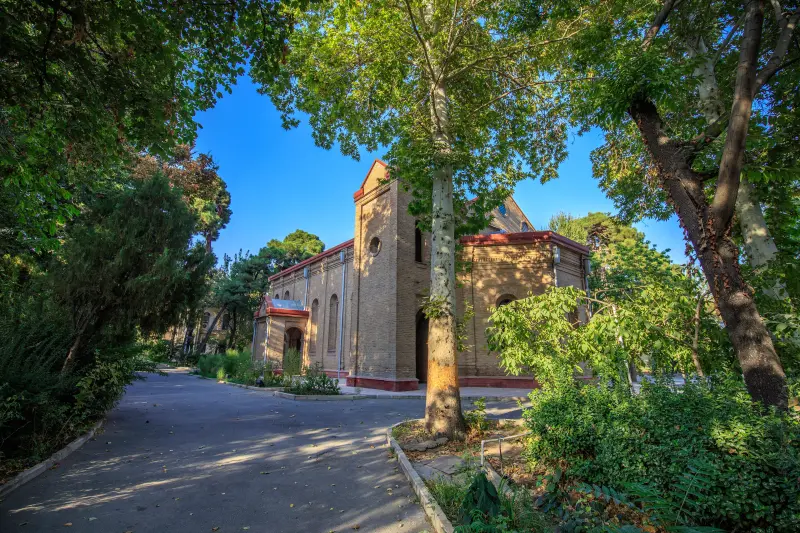
Iran Trying to Evict Christians From Oldest Protestant Church in Tehran as Crackdown Intensifies
Church leaders and religious freedom advocates say Iranian authorities are moving to seize the historic St. Peter Evangelical Church compound in Tehran, potentially displacing Christian families who have lived there for years.
Iranian authorities are reportedly seeking to take control of St. Peter Evangelical Church, one of Tehran’s oldest Protestant churches, while Christian leaders warn that families living within the church compound could be forced from their homes.
According to church representatives and religious leaders familiar with the situation, the authorities have threatened to seize the property and remove approximately 20 families who rely on the church compound for housing and community support.
The reported move would place the historic church under state control and could result in the eviction of Christian residents who have lived on the property for years.
Church Leaders Say Pressure Has Intensified
The latest dispute comes amid broader concerns about pressure on religious minorities following a period of political instability, mass protests and heightened confrontation involving Iran, the United States and Israel.
Sasan Tavassoli, an Iranian Presbyterian pastor based in the United States who says he remains in direct contact with people associated with St. Peter, described an increasingly confrontational attitude toward institutions perceived as having ties to the United States.
“We were concerned about America all these years. America came. They slapped us on the face. We slapped them on the face back. And then America withdrew. So we are no longer afraid of America.”
— Statement attributed by Sasan Tavassoli to Iranian officialsChurch representatives believe St. Peter’s historical connection to American Presbyterian missionaries has made the institution particularly vulnerable amid worsening relations between Tehran and Washington.
A Church With More Than 150 Years of History
The church was established in Tehran by American Presbyterian missionaries and later became an important religious and community center for Protestant Christians in Iran.
The church compound has also provided housing for low-income Christian families, some of whom have reportedly lived on the property for many years.
Church officials say the dispute extends beyond the sanctuary itself, involving residential areas, supporting facilities and land traditionally associated with the congregation.
Church Property Allegedly Transferred to State-Controlled Entity
According to a letter attributed to Sargez Benyamin, executive secretary of the Synod of the Evangelical Church of Iran in Diaspora, orders concerning the property have been linked to the Execution of Imam Khomeini’s Order, a powerful state-affiliated organization.
Church representatives allege that authorities are creating new ownership documents for the property through a state-controlled entity, while the church has been unable to renew its operating license.
Benyamin, who previously served as a pastor at St. Peter and now lives outside Iran, said church representatives believe they have little practical ability to challenge the action through Iran’s legal system.
“In Iran, you don’t have an independent court. So it would not be possible for us to fight back.”
— Sargez BenyaminHe alleged that documents connected to church property had already been confiscated and replaced with documents placing ownership under an organization linked to the country’s leadership.
Part of Church Land Already Reportedly Seized
Church representatives further allege that authorities have already taken control of approximately 2.5 acres of garden property belonging to the church.
Tavassoli has said the location and size of the property make it highly valuable, estimating that the overall compound could be worth tens of millions of dollars.
Security Forces Reportedly Identifying Residents
Concerns about an approaching eviction have increased following reports that members of Tehran’s security forces entered the church compound and began identifying people living there.
Tavassoli said church members were told that officials could return later to remove residents and assume control of the site.
Benyamin warned that some of the families would face severe hardship if removed from the property, saying the church provides far more than a place of worship for residents living inside the compound.
Church representatives also fear that worshippers who refuse to comply with an eviction order could potentially face detention or other legal consequences.
Concerns Over Religious Freedom in Iran
The dispute has renewed attention on the position of Christian communities and other religious minorities inside Iran.
Although historically recognized Christian communities continue to operate some churches in the country, religious rights organizations have repeatedly raised concerns about restrictions on Christian activity, pressure on converts and government scrutiny of congregations.
The case of St. Peter is particularly significant because of the church’s long history and its role as both a religious institution and a community center for Christian families in Tehran.
The future of St. Peter Evangelical Church remains uncertain. Church representatives say they fear the state could complete the property transfer and begin removing residents, while those connected to the congregation continue to call attention to the case and its implications for religious freedom in Iran.
